

Overseed
- David Buckner

- Sep 8, 2021
- 2 min read
Updated: Sep 15, 2021
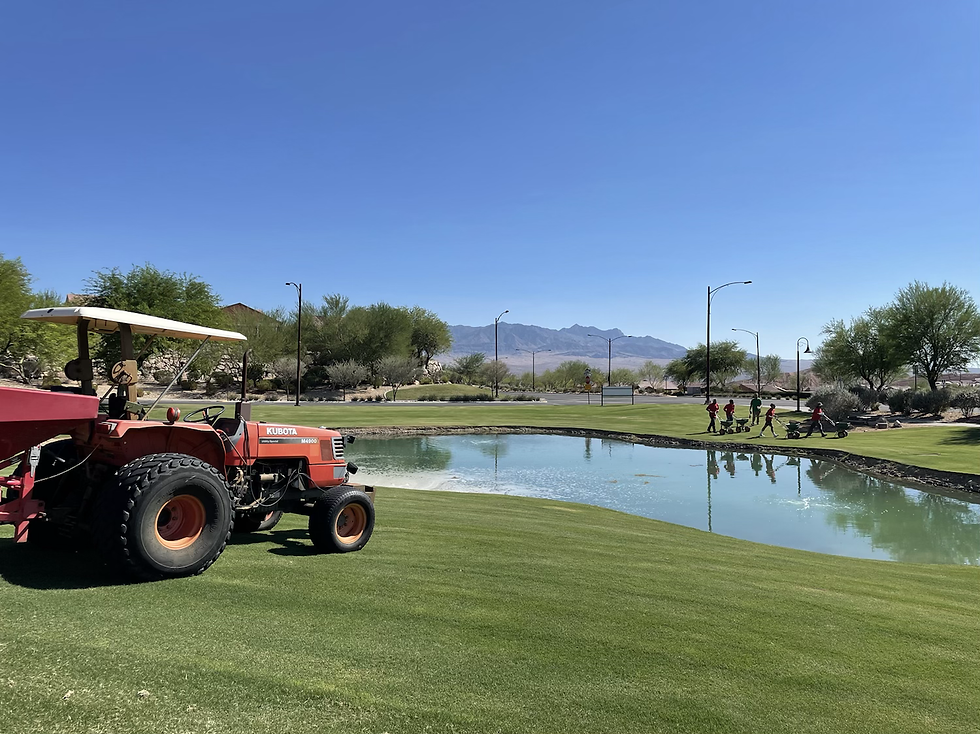
Every September, we close the golf course for 4 weeks to overseed it, starting the day after Labor Day.
What is Overseed?
Overseed is a process in which golf courses either chemically, or culturally stunt the growth of the bermudagrass and plant cool season grass within the existing turf. Courses typically use perennial ryegrass to overseed. The ryegrass is then watered for germination and growth, fertilized, and grown within and above the underlying bermudagrass to shade it out and take over the playing surface for the coming Fall/Winter/Spring golf season.
Why do we overseed?
Bermudagrass is considered a “warm season” grass. Warm season grasses are a lot more heat tolerant, but go into dormancy during cooler temperatures. The overseeded ryegrass is a “cool season” grass that will grow and remain active in cooler temperatures, but struggle to survive in extreme heat.
In transition zones such as the desert southwest, it is too hot in the summer to efficiently grow cool season turfgrasses year round, but also too cold in the winter months to keep warm season turfgrasses actively growing.
This is where the overseed process comes in to play. We plant and transition the warm season bermudagrass into cool season ryegrass for the winter, then late spring early summer, we transition back to our bermudagrass base as the ryegrass dies due to heat stress and other environmental factors. Is overseed necessary?
On a high traffic, high use golf course such as Conestoga, overseed definitely keeps the course looking and playing better. The problem with overseed is that it comes with a cost. And determining weather or not that cost Is worth the results is the real question. First off, overseed is expensive in itself with seed prices and fertilizer prices on the rise, it puts a big dent in the budget.
Overseed also puts a lot of wear and tear on the pump station by constantly running during our grow in period. The most noticed factor by golfers, is the fact that overseeding Bermudagrass and shading it out for 7-8 months out of the year can result in poor spring transition and a thin bermudagrass base coming back into the summer. The shorter heights of cut are able to get more sunlight and transition better, whereas the rough struggles significantly more.
Aggressive fertility and proper cultural practices are key to regaining a strong bermudagrass base going back into overseed. This is something that we prepare for and expect by doing a wall to wall overseed. Many courses around town only overseed fine turf (shorter heights of cut) or “down the middle” and this results in a much easier spring transition back into bermudagrass. These are some of the factors to weigh and consider when deciding whether or not to overseed a golf course.


Comments